
Encyclopedia
 current location: Home > News > Encyclopedia
 Release time:2026-08-17
 page views:
 Working Principle of Jaw Couplings: Full Guide to Flexible Spider Couplings
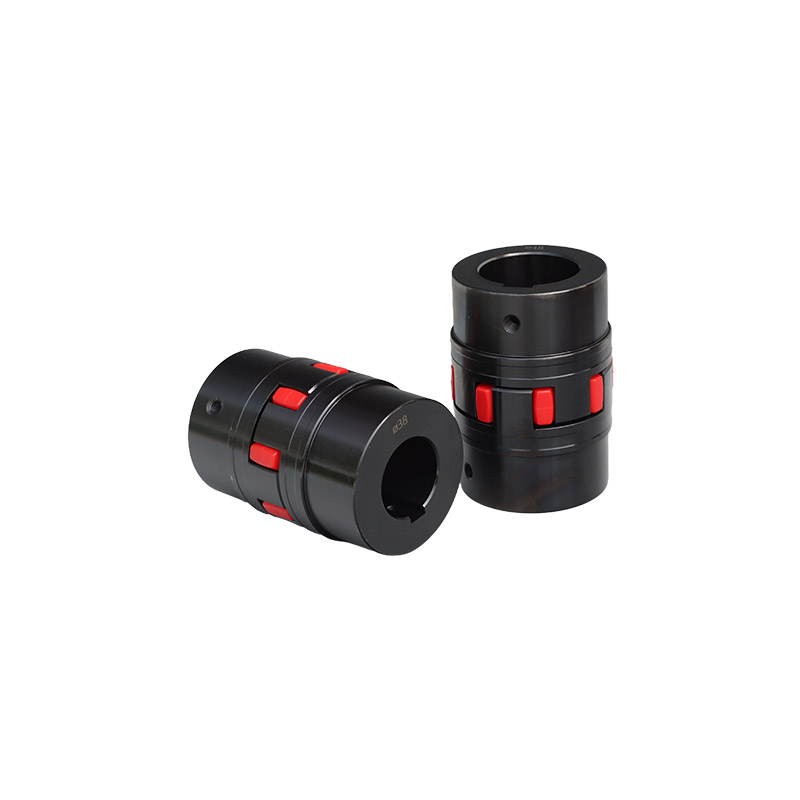
Jaw couplings, also widely known as spider couplings in the industry, are one of the most commonly used flexible couplings in general industrial transmission systems. They are extensively applied in water pumps, fans, reducers, servo conveying lines, light industrial machine tools and other conventional transmission equipment. Unlike rigid couplings that adopt rigid connection for power transmission, jaw couplings rely on flexible elastomer power transmission, misalignment compensation and vibration damping to adapt to most standard industrial working conditions. Combined with real equipment operating states, this article elaborates on the structure, complete working principle, compensation mechanism and practical operating characteristics of jaw couplings without idealized theoretical deviation.Jaw couplings, commonly referred to as spider couplings, are highly prevalent flexible couplings used in general industrial power transmission systems. They are widely equipped on water pumps, fans, gear reducers, servo conveyor systems, light-duty machine tools and other standard industrial machinery. Different from rigid couplings that deliver torque through rigid metal contact, jaw couplings transmit power via flexible elastomer deformation, while offering shaft misalignment compensation and vibration damping to suit most conventional operating conditions. Based on real on-site equipment operation, this article comprehensively explains the structure, working principle, three-dimensional compensation mechanism and practical performance characteristics of jaw couplings, with strictly industry-verified and non-idealized technical content.
1. Standard Industrial Structure Composition
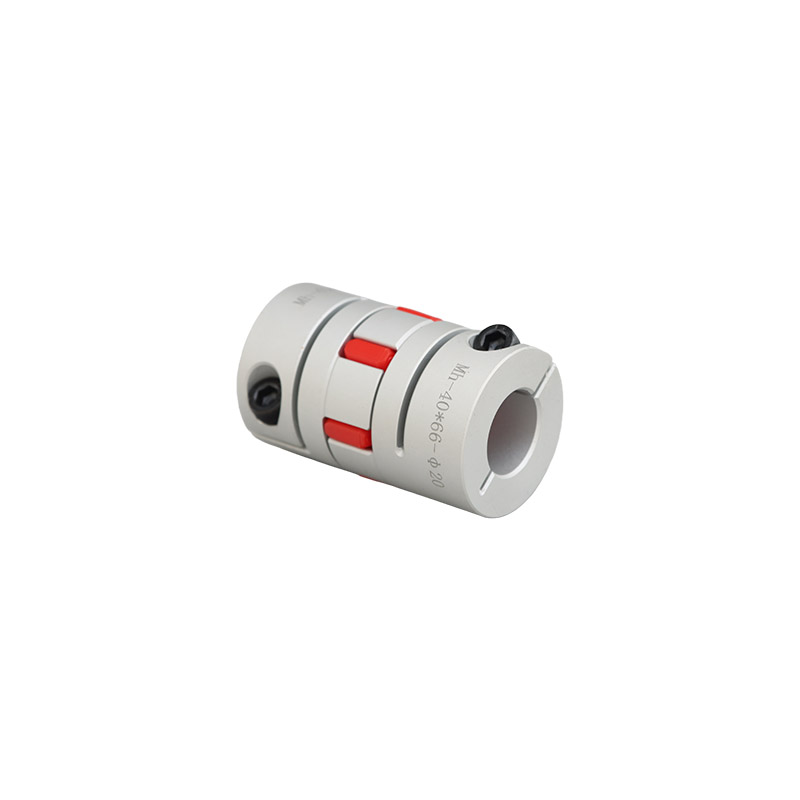
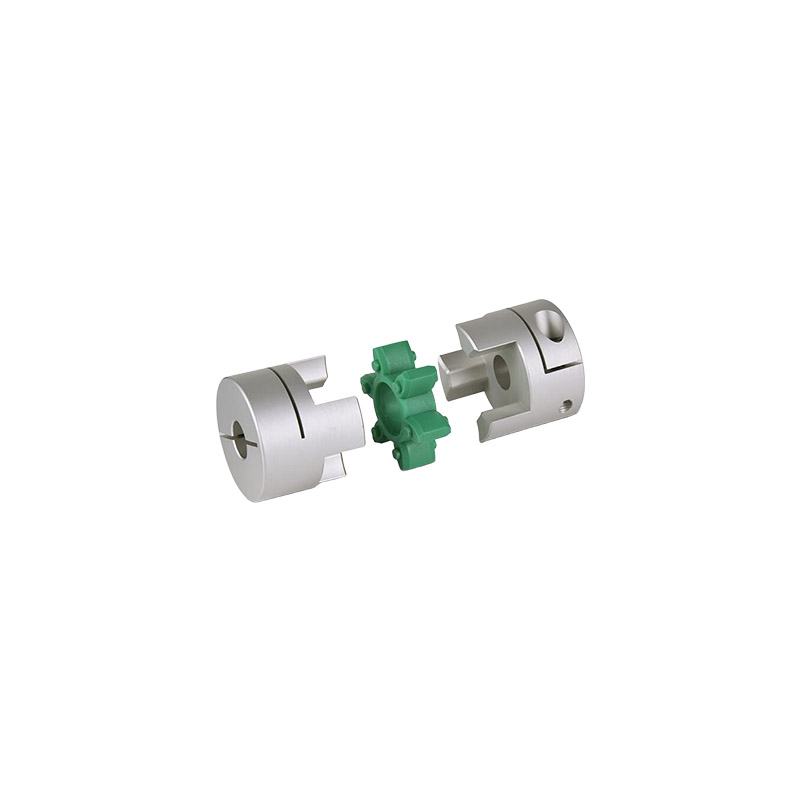
Jaw couplings feature a simple and compact structure consisting of only three core components. With no complex transmission mechanism, zero lubrication requirement and maintenance-free performance, they achieve extremely high industry popularity for practical reasons:Jaw couplings adopt a simple, compact and durable structure with only three core components. Requiring no lubrication and daily maintenance, this reliable design makes them one of the most popular flexible coupling solutions in industrial applications:
1. Two Metal Jaw Hubs (Half Couplings): For standard working conditions, hubs are made of quenched and tempered 45# steel. Aluminum alloy is adopted for high-precision servo and lightweight equipment, while stainless steel is used for corrosion-resistant special scenarios. The inner side of each hub is evenly distributed with jaw-shaped teeth. The teeth of two hubs are arranged in a staggered non-contact state, eliminating metal hard friction during operation.1. Dual Metal Jaw Hubs (Half Couplings): Standard hubs are manufactured from quenched and tempered 45# carbon steel. For lightweight servo equipment and high-precision applications, aluminum alloy hubs are preferred, while stainless steel hubs are used for corrosive working environments. Each hub features evenly distributed jaw-shaped teeth. The two hubs are installed in a staggered tooth arrangement with no direct metal-to-metal contact, eliminating rigid friction and abrasion during operation.
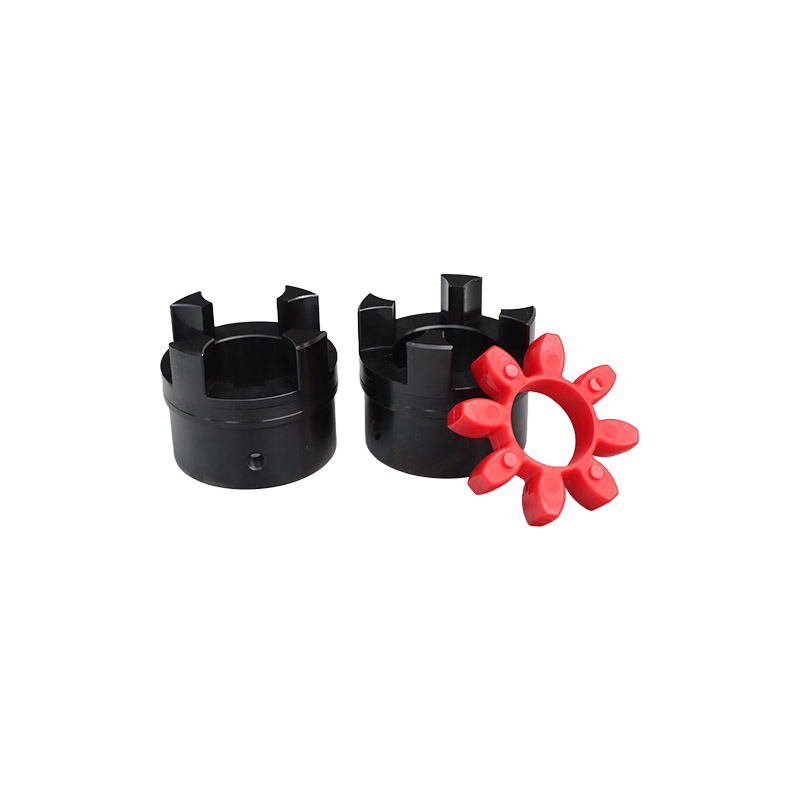
2. Elastomer Spider (Jaw Cushion): As the core wearable component sandwiched between two sets of jaw teeth, the spider has three mainstream materials: polyurethane (PU), nitrile rubber (NBR) and nylon (PA). Different materials correspond to distinct working conditions and directly determine the coupling’s vibration damping, temperature resistance, oil resistance and wear resistance performance.2. Elastomer Spider (Flexible Cushion): Serving as the core wearable and buffer component, the elastomer spider is sandwiched between the staggered jaw teeth of two hubs. Three mainstream materials are widely adopted: polyurethane (PU), nitrile rubber (NBR) and nylon (PA). Each material delivers distinct performance in vibration damping, temperature resistance, oil resistance and wear resistance, determining the coupling’s applicability to different working conditions.
3.Fastening Accessories: Including set screws, flat keys and clamping bolts, these parts firmly lock the hubs with driving and driven shafts to eliminate axial and circumferential displacement during operation.3. Fastening Components: Consisting of set screws, flat keys and clamping bolts, these accessories firmly fix the hubs on driving and driven shafts, preventing axial movement and circumferential slippage during long-term operation.
2. Core Working Principle (Fully Consistent with Actual Transmission Process)
The power transmission of jaw couplings does not depend on metal meshing. Its core mechanism is jaw teeth squeezing the elastomer and transmitting power through controlled elastic deformation. The whole flexible transition process perfectly adapts to real industrial operating states such as equipment startup, shutdown and load fluctuation. The specific operating process is as follows:Jaw couplings do not rely on rigid metal meshing for power transmission. Their core working principle is elastic torque transmission through controlled deformation of the elastomer squeezed by jaw teeth. This flexible transmission mode smoothly adapts to actual industrial operating scenarios, including equipment startup, shutdown, frequent reversing and dynamic load fluctuation. The detailed working process is as follows:
After the equipment starts up, the driving shaft drives the active metal hub to rotate. The jaw teeth evenly squeeze the lobes of the elastomer spider. The stressed elastomer generates controllable compressive elastic deformation, stably transmits torque to the staggered driven jaw teeth, and further drives the driven shaft and load equipment to operate synchronously.
During continuous operation, frequent startup/shutdown and slight load fluctuation, the metal jaw teeth never contact each other directly. All power transmission, impact buffering and misalignment compensation are completed by the intermediate elastomer. This structural design fundamentally avoids hard impact, abnormal noise and shaft wear caused by rigid connection.During continuous operation, frequent start-stop cycles and minor load changes, the metal jaw teeth remain completely isolated. All torque transmission, impact buffering and shaft misalignment compensation are undertaken solely by the intermediate elastomer. This structural design effectively avoids mechanical impact, abnormal operating noise and premature shaft and bearing wear caused by rigid transmission connections.
3. Three-Dimensional Misalignment Compensation Principle (Practical On-Site Knowledge)
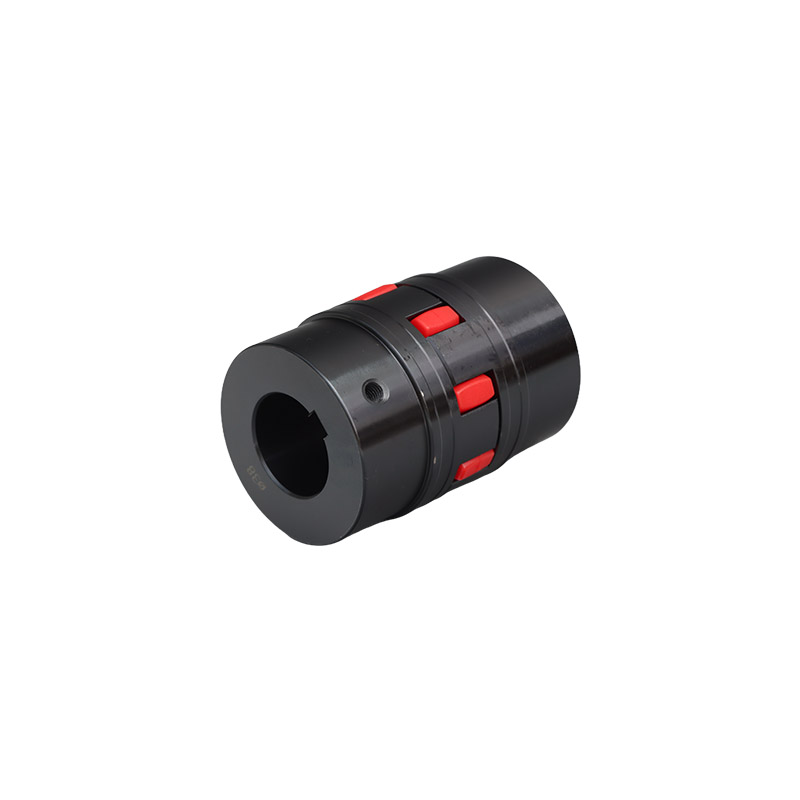
Absolute coaxiality is impossible in industrial equipment installation. Base settlement, machining errors, operating vibration and shaft thermal expansion will all cause shaft misalignment. Relying on the compression, shear and tensile deformation of the elastomer, jaw couplings can compensate three types of actual working misalignments, which is the key to their strong adaptability:
1. Radial Misalignment Compensation (Eccentric Offset): When horizontal or vertical offset occurs between two shafts, the elastomer is compressed on one side and slightly stretched on the other. Adaptive deformation counteracts eccentric stress and prevents forced tension and wear on shafts and bearings. Standard ML-type jaw couplings allow a radial offset of 0.2–0.5mm, fully covering conventional installation errors.
2. Angular Misalignment Compensation (Inclination Offset): When a tiny inclination angle exists between two shafts, each lobe of the elastomer adjusts stress evenly to adapt to angular deflection, avoiding local overload and accelerated wear of individual jaw teeth. The standard allowable angular deviation is 1°–1.5°.
3. Axial Misalignment Compensation (Axial Float): Shaft thermal elongation and axial float during startup and shutdown will cause axial displacement. The elastomer allows slight axial deformation to reserve expansion clearance, preventing hub jamming and elastomer crushing failure caused by thermal expansion.
4. Two Core Functions in Actual Working Conditions
In addition to basic power transmission, jaw couplings undertake critical protective functions for the entire transmission system, serving as a flexible buffer protector for industrial equipment:
1. Vibration Damping and Impact Absorption: Instant startup, sudden load change and frequent forward/reverse rotation of motors generate transient impact torque. The elastomer absorbs impact energy through deformation, reduces vibration and noise, and protects precision components such as motor bearings, reducer gears and main shafts, effectively lowering equipment failure rates.
2. Electrical Isolation and Bearing Erosion Prevention: PU and rubber elastomers have excellent insulation properties, which can block stray current between shaft systems and avoid bearing electrical erosion, abnormal noise and shaft jamming, making them suitable for servo motors and precision transmission equipment.
5. Working Condition Adaptation of Different Elastomer Materials (On-Site Practical Matching)
With the same coupling structure, different elastomer materials apply to completely different working conditions. This is the most easily ignored factor that directly determines the service life of jaw couplings:
1. Polyurethane (PU) — General-Purpose Grade: Featuring high elasticity, excellent wear resistance and strong deformability, PU spiders are the first choice for fans, conveying equipment and ordinary motors under normal-temperature, medium-high speed and oil-free working conditions. The disadvantages are poor high-temperature resistance (aging and softening above 80°C) and no oil resistance.
2. Nitrile Rubber (NBR) — Oil-Resistant Grade: NBR spiders have outstanding oil resistance, aging resistance and vibration damping performance. They are specially designed for equipment with oil splashing such as reducers and hydraulic systems, adapting to medium and low temperature working conditions with light and medium impact loads.
3. Nylon (PA) — Heavy-Duty Grade: Nylon spiders feature high hardness, strong extrusion resistance and high temperature resistance with low deformation rate, suitable for high-torque, heavy-load and high-temperature scenarios. The drawback is weak vibration damping, making them unsuitable for precision equipment with frequent startup and shutdown.
6. Working Condition Adaptation Boundaries (Practical Avoidance Tips)
Based on its working principle and structural characteristics, jaw couplings have clear applicable and inapplicable scenarios that fully conform to actual factory operation:
Applicable Scenarios: Equipment with conventional speed, medium torque, slight installation misalignment, frequent startup/shutdown and light impact loads, including water pumps, fans, reducers, ordinary servo mechanisms, packaging machinery and conveying equipment.
Inapplicable Scenarios: Equipment with continuous heavy impact loads, operating temperature above 120°C, strong corrosive medium, ultra-high speed (>10000rpm) and zero-backlash high-precision positioning requirements. Under these conditions, the elastomer is prone to fatigue and excessive deformation, resulting in unstable operation.
7. Conclusion
The core operating logic of jaw couplings can be summarized as: metal positioning, elastic power transmission, deformation misalignment compensation and flexible buffering. Benefiting from simple structure, maintenance-free performance, adaptive installation deviation and vibration reduction protection, they have become universal basic accessories for industrial transmission systems.
Without complex transmission structures, jaw couplings solve a series of practical industrial problems including installation errors, shaft thermal expansion, startup impact and vibration wear through controllable elastomer deformation. A thorough understanding of its working principle supports accurate type selection and standardized installation, fundamentally reducing common failures such as spider crushing, equipment abnormal noise and shaft system wear.


Hotline:
+8615066616606 hq@hqcplg.com



 No. 188 Kunlun Road, Hongyun Development Zone, Qingyun County, Dezhou City, Shandong Province