Diaphragm Coupling: The Flexible Link of Precision Industrial Transmission
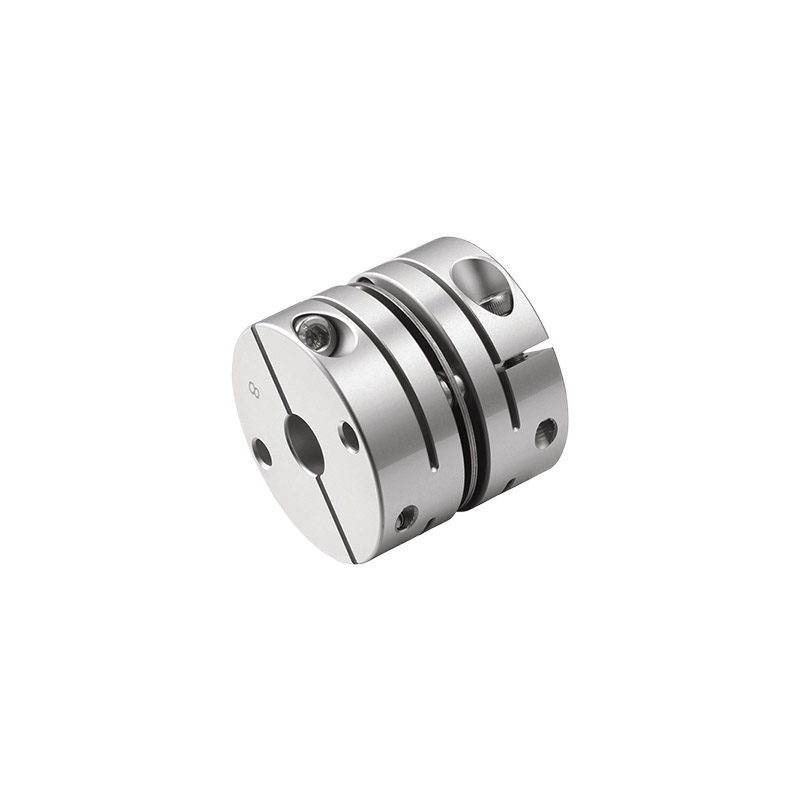
In mechanical equipment, couplings are indispensable core transmission components, known as the "connectors" of equipment power systems. They are primarily used to connect driving and driven shafts, transmit torque, and cushion operational vibration while compensating for shaft misalignment. Among various coupling types, diaphragm couplings stand out as the preferred transmission component for high-speed, high-precision, and harsh working conditions due to their high accuracy, long service life, and maintenance-free performance. They are widely applied in high-end fields including intelligent manufacturing, energy, chemical engineering, and aerospace. This article comprehensively introduces this versatile and sophisticated core component for industrial precision transmission.
1. What Is a Diaphragm Coupling?
A diaphragm coupling is a high-performance flexible coupling with metallic elastic elements. Unlike traditional rubber, gear, and sleeve couplings, it adopts no rubber flexible parts or gear meshing structures, and its core transmission and compensation components are multi-layer stainless steel diaphragms. It operates on an ingenious working principle: it transmits power through tiny elastic deformation of metal diaphragms and automatically compensates for installation deviations and operational displacement between two connected shafts, perfectly combining rigid torque transmission and flexible misalignment compensation.
Simply put, it acts as an "elastic bridge" between equipment shaft systems. It stably transmits power without slipping and eliminates shaft offset caused by installation errors and operational vibration through subtle self-deformation, ensuring the stable operation of the entire transmission system.
2. Core Structure and Working Principle
2.1 Basic Structure
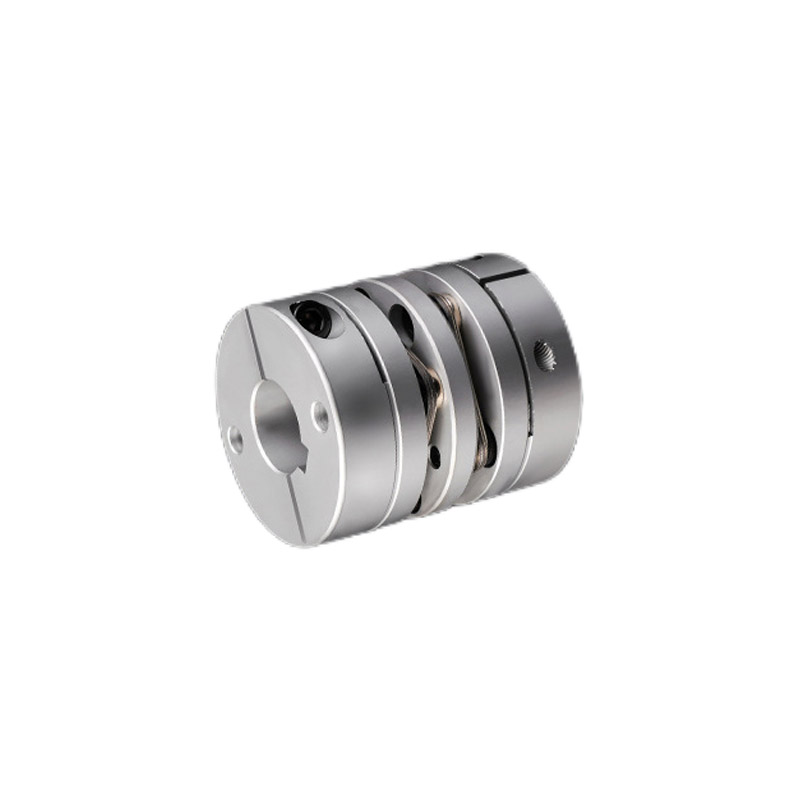
Featuring a compact and simplified structure with no complex moving parts, a standard diaphragm coupling consists of four main components, and an intermediate spacer is equipped for extended models:
Hub: Metal connecting bases on both sides, fixedly nested on the driving and driven shafts respectively, serving as the carrier for power input and output.Metal Diaphragm Assembly: The core functional component, stacked with multiple thin 304/316 stainless steel sheets, featuring high toughness, good elasticity, and excellent fatigue resistance.
High-strength Connecting Bolts: Firmly fasten the diaphragm assembly and hubs in a staggered arrangement to accurately transmit torque and eliminate transmission backlash.
Spacer (Optional): Equipped for double-diaphragm and long-distance transmission models, used to adjust shaft spacing and enhance misalignment compensation capability.
2.2 Working Principle
During equipment operation, the driving shaft rotates one side of the hub, which pulls the metal diaphragm assembly to produce uniform elastic deformation via high-strength bolts, thereby driving the other hub and driven shaft to rotate synchronously and complete torque transmission.
In operation, different diaphragm structures provide targeted shaft misalignment compensation. A single-diaphragm coupling compensates for axial and angular displacement deviations, while a double-diaphragm coupling with an intermediate spacer compensates for three types of deviations: axial, radial, and angular. Axial compensation absorbs shaft telescopic displacement, radial compensation corrects coaxiality errors, and angular compensation offsets shaft angle deviation. The entire transmission process involves no component friction, elastic sliding, or backlash, realizing high-precision and lossless power transmission.
3. Core Advantages Over Traditional Couplings
Diaphragm couplings have replaced traditional couplings as the mainstream choice for precision equipment, solving the inherent defects of conventional transmission components with unique performance advantages:
Zero-backlash and High-precision Transmission: The all-metal rigid torque transmission structure avoids backlash caused by rubber aging and gear wear, delivering ultra-high transmission accuracy suitable for high-precision closed-loop transmission scenarios such as servo motors and CNC machine tools.Maintenance-free and Long Service Life: No mutually frictional moving parts or lubrication required, eliminating oil leakage and wear failures. With outstanding fatigue resistance, its service life is 5 to 10 times that of rubber couplings.
Adaptable to Harsh Working Conditions: Metal diaphragms are immune to temperature changes, oil contamination, and dust. With excellent acid, alkali, and corrosion resistance, they operate stably in high and low temperature environments (-40℃ to 200℃), corrosive media, and dust-free clean environments.
Lightweight and High Strength: Compact in size and light in weight with low moment of inertia, it does not affect the start-stop response speed of equipment. Meanwhile, it boasts high torque bearing capacity and structural strength with minimal deformation risk.
Easy Installation and Strong Adaptability: No equipment displacement or complex calibration is required for assembly and disassembly. Various structures including single-diaphragm, double-diaphragm, and extended types adapt to short-distance and long-distance shaft transmission scenarios.
4. Main Classifications and Applicable Scenarios
Diaphragm couplings are mainly divided into two categories according to structural forms, matching different equipment working conditions with clear selection criteria:
4.1 Single-diaphragm Coupling
It features a simpler structure, smaller size, and higher rigidity with limited misalignment compensation capacity. It is applicable only to equipment with high installation accuracy, short shaft spacing, and low vibration, commonly used in small precision machine tools, micro water pumps, and ordinary servo transmission equipment.
4.2 Double-diaphragm Coupling
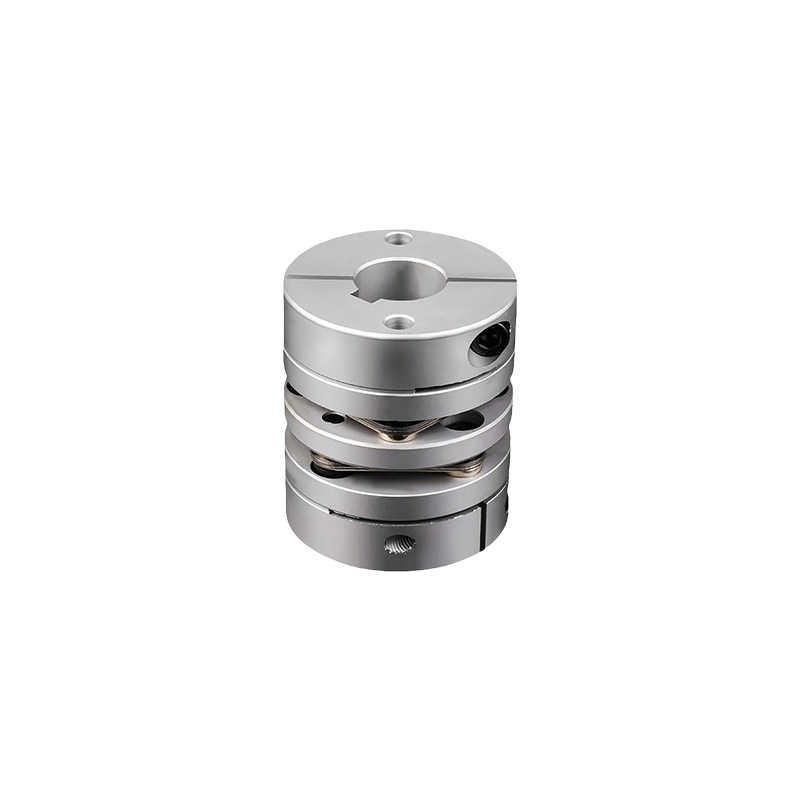
Equipped with two sets of diaphragms and an intermediate spacer, it achieves significantly improved displacement compensation capability, effectively offsetting equipment installation deviations and operational vibration. With wide adaptability, it is the mainstream industrial model. It is widely used in medium and high-end scenarios such as high-power water pumps, fans, compressors, precision automated production lines, robots, and aerospace equipment.
5. Wide Application Fields
Benefiting from high precision, stability, and maintenance-free performance, diaphragm couplings cover most precision industrial transmission scenarios:
Intelligent Manufacturing: CNC machine tools, servo motors, industrial robots, automated production lines, precision testing equipment.
Energy and Power: Wind turbines, steam turbines, generator sets, high and low-pressure water pumps, ventilators, compressors.
Chemical and Environmental Protection: Chemical pumps, corrosion-resistant transmission equipment, sewage treatment equipment, suitable for humid and corrosive harsh working conditions.
High-end Equipment: Aerospace equipment, precision instruments, medical equipment, high-speed transmission machinery.
6. Selection and Daily Maintenance Guidelines
6.1 Core Selection Principles
There is no need for over-specification during selection. Priority should be given to matching three core parameters: equipment rated torque, shaft diameter, and working conditions. Double-diaphragm structures are preferred for high-speed, large misalignment, and long-distance shaft scenarios; single-diaphragm structures are suitable for small precision scenarios requiring high rigidity.
6.2 Simple Maintenance Tips
Diaphragm couplings are nearly maintenance-free. Daily maintenance only requires regular inspection of bolt tightening status to avoid loosening caused by long-term vibration. Long-term overload operation of equipment should be prevented to avoid fatigue deformation of diaphragms. If transmission abnormal noise or power deviation occurs, check the diaphragms for deformation and aging and replace them in a timely manner.
7. Conclusion
As a precise flexible link in industrial transmission systems, diaphragm couplings overcome the shortcomings of traditional couplings such as low accuracy, easy wear, frequent maintenance, and poor adaptability to harsh environments. With the comprehensive advantages of zero backlash, high precision, long service life, high and low temperature resistance, corrosion resistance, and maintenance-free operation, they have become indispensable core components in modern precision industries.
Though small in size, these metal parts steadily support the stable, efficient, and precise operation of various high-end equipment. They are typical representatives of small components with great value in mechanical transmission systems and an important foundation for the upgrading of industrial manufacturing towards high precision and high reliability.

 current location: Home > News > Encyclopedia
 Release time:2026-08-15
 page views:

 hq@hqcplg.com



 No. 188 Kunlun Road, Hongyun Development Zone, Qingyun County, Dezhou City, Shandong Province