Differences Between Telescopic and Ordinary Universal Joints
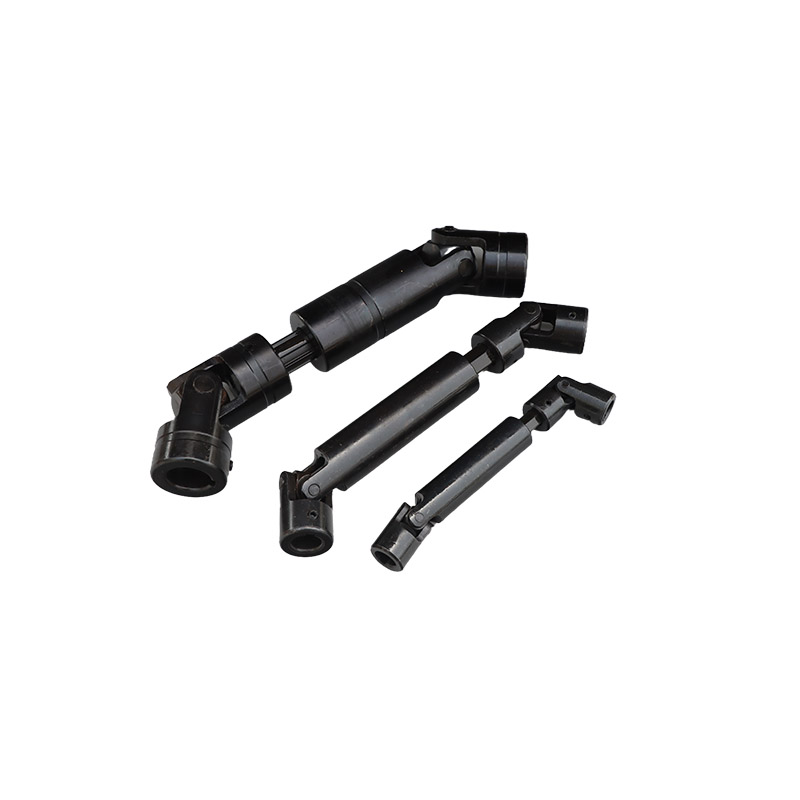
In the field of mechanical transmission, universal joints are core components that transmit torque between intersecting and offset shafts. They are widely used in construction machinery, automated equipment, conveying machinery, automotive transmission systems and other fields. During equipment selection and maintenance, many people cannot clearly distinguish between telescopic universal joints and ordinary universal joints. Improper selection often leads to equipment stalling, abnormal noise, component wear and even equipment damage. In fact, the two share the same working principle and origin. The core differences lie in structural expansion capabilities and applicable working conditions. This article elaborates on their essential differences in a simple and straightforward manner.
I. Shared Core: Identical Basic Transmission Principles
Both ordinary and telescopic universal joints are predominantly cross-shaft universal joints, with core components including universal joint yokes, cross shafts and needle roller bearings. They possess the same basic function of angular compensation. When there is a certain included angle or coaxial deviation between the driving shaft and the driven shaft, both can stably transmit torque and adapt to angular deflection and installation coaxial errors during equipment operation.
Meanwhile, they share the same limitations. Single-section structures of both feature non-uniform transmission characteristics, resulting in speed fluctuation under large-angle and high-speed operating conditions. A double-section structure is required for high-speed and precision transmission scenarios. In addition, both have weak radial offset compensation capacity and cannot adapt to working conditions with large radial misalignment between two shafts.
II. Essential Difference: Structural Design Determines Core Performance Gap
The fundamental distinction between the two types of universal joints lies inwhether they are equipped with an axial telescopic compensation structure, which accounts for all subsequent differences in performance and application scenarios.
1. Ordinary Universal Joint: Fixed-Length Basic Transmission Component
The ordinary universal joint adopts an integrated fixed structure with a fully locked overall length and no slidable or telescopic parts. It features a simple structure with few accessories, relying only on the cross shaft assembly to complete angular deflection transmission, delivering high overall rigidity and low failure rate. However, its fixed length leads to strict requirements for installation dimensions and equipment operating states. The spacing between the two transmission shafts must be precisely fixed, and no axial play or dimensional variation is allowed during operation.
2. Telescopic Universal Joint: Upgraded Dynamically Adaptive Transmission Component
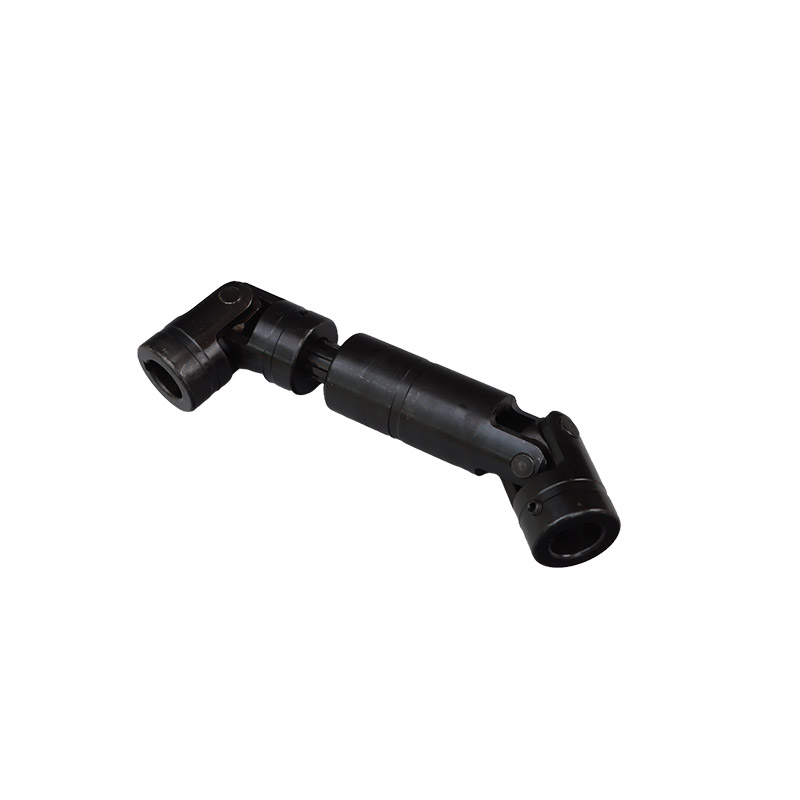
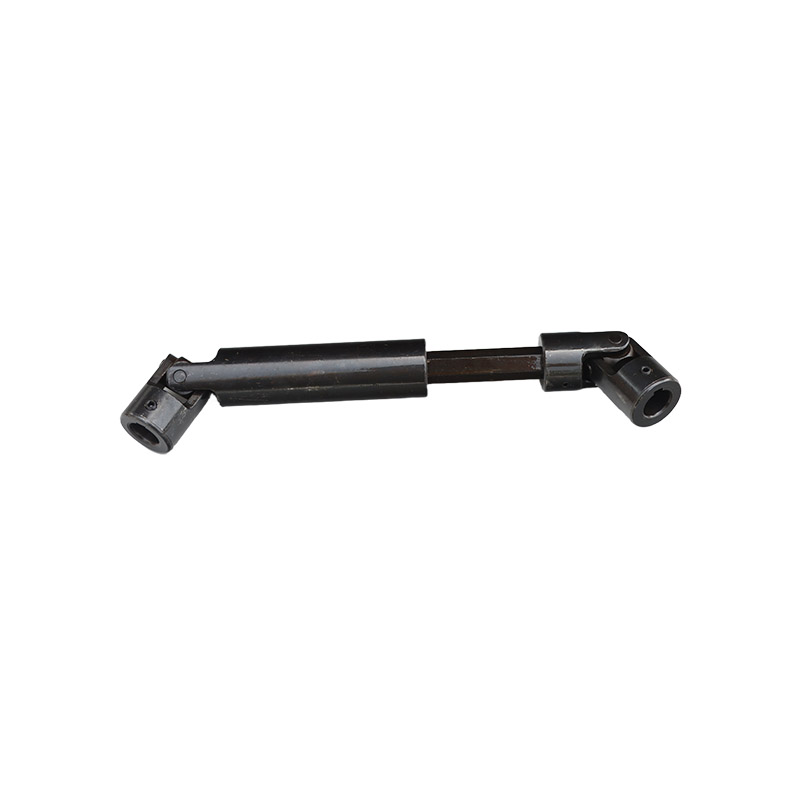
The telescopic universal joint is an upgraded version based on the ordinary universal joint, added with internal and external spline sliding pairs and dust-proof sealing components. The spline pair enables free axial sliding while transmitting torque, allowing the overall length of the universal joint to change dynamically within the rated stroke. Simply put, the ordinary universal joint is a "fixed-length rigid connection", while the telescopic universal joint is a "flexible connection with adjustable length". It retains the original angular compensation capability and adds the unique function of axial displacement compensation.
III. Comprehensive Differences in Working Conditions: Installation, Operation and Maintenance
1. Installation Accuracy Requirements
Ordinary universal joints demand high installation accuracy. The shaft spacing and installation position must strictly comply with design drawings. Minor dimensional deviations will cause shaft jamming and overload wear of bearings during operation, greatly shortening the service life of equipment.
Telescopic universal joints come with built-in axial fault tolerance, eliminating the need for precise control of shaft spacing. They can automatically offset installation errors, reduce assembly and commissioning difficulty, and significantly lower labor costs for equipment installation and maintenance.
2. Operational Adaptability
Ordinary universal joints are only applicable to static transmission working conditions with permanently fixed shaft spacing and no displacement changes. Once thermal expansion and contraction, frame vibration or shaft axial play occurs during equipment operation, the fixed-length universal joint will be subject to rigid tension, causing abnormal noise, jitter and even fracture damage.
Telescopic universal joints perfectly adapt to dynamic working conditions. They can real-timely compensate for dimensional changes caused by thermal expansion and contraction, shaft axial play and mechanism telescopic displacement during equipment operation, maintaining stable transmission at all times, avoiding rigid stress damage and improving overall equipment operational stability.
3. Maintenance and Cost Differences
With an extremely simple structure and no sliding parts, ordinary universal joints only require regular lubrication and maintenance for cross shaft bearings. They feature low wear, low failure rate, lower procurement and operating costs, and excellent cost performance.
Telescopic universal joints have a more complex structure. The added spline sliding pairs require regular grease lubrication, and dust covers are vulnerable parts that need regular inspection and replacement, leading to more tedious maintenance procedures. Meanwhile, the complex structure results in heavier weight and higher procurement costs.
IV. Scenario Selection: Avoiding Errors Through Targeted Selection
Based on their respective characteristics, the two types of universal joints can be accurately matched to applicable scenarios to maximize cost performance and practicality:
Ordinary Universal Joint Priority: Suitable for equipment with fixed frames and unchanged transmission shaft spacing. Typical applications include fixed reducer transmission, small precision fixed assembly lines, static transmission mechanisms and other static transmission scenarios.
Telescopic Universal Joint Mandatory Use: Suitable for working conditions with operational dimensional changes, displacement and frequent disassembly and assembly. Common scenarios include construction machinery traveling mechanisms, bucket elevators, high-temperature metallurgical equipment (obvious thermal expansion and contraction), automated movable tooling, and transmission systems requiring frequent maintenance and disassembly.
V. Summary
The differences between the two can be briefly summarized as follows: Ordinary universal joints excel in simplicity, durability and cost performance, suitable for static fixed transmission; telescopic universal joints feature flexible adaptability and high fault tolerance, ideal for dynamic variable transmission. There is no absolute superiority or inferiority between them, only differences in scenario adaptation. During equipment parts selection, there is no need to blindly choose upgraded products. Selecting the appropriate type according to whether the equipment has axial displacement and variable shaft spacing can ensure stable equipment operation and effectively control operating costs.

 current location: Home > News > Encyclopedia
 Release time:2026-08-10
 page views:

 hq@hqcplg.com



 No. 188 Kunlun Road, Hongyun Development Zone, Qingyun County, Dezhou City, Shandong Province