
Hello! Welcome to the official website of Huaqiang Coupling!

Encyclopedia

current location: Home > News > Encyclopedia

High Torque Eccentric Coupling Joint: A Robust Solution for Heavy-Duty Parallel Misalignment Transmission
Release time:2026-08-09page views:

High Torque Eccentric Coupling Joint: A Robust Solution for Heavy-Duty Parallel Misalignment Transmission

十字滑块联轴器_007.jpg


In industrial transmission systems, shaft misalignment, assembly deviations, frame deformation, and foundation settlement are unavoidable common issues. When conventional couplings face significant parallel shaft offset, they are prone to transmission jitter, additional load, torque loss, and premature component failure. This is especially true for heavy-duty, high-load, and complex working conditions in industries such as heavy machinery, material handling, and precision machining, where standard transmission components often fail to meet operational requirements.


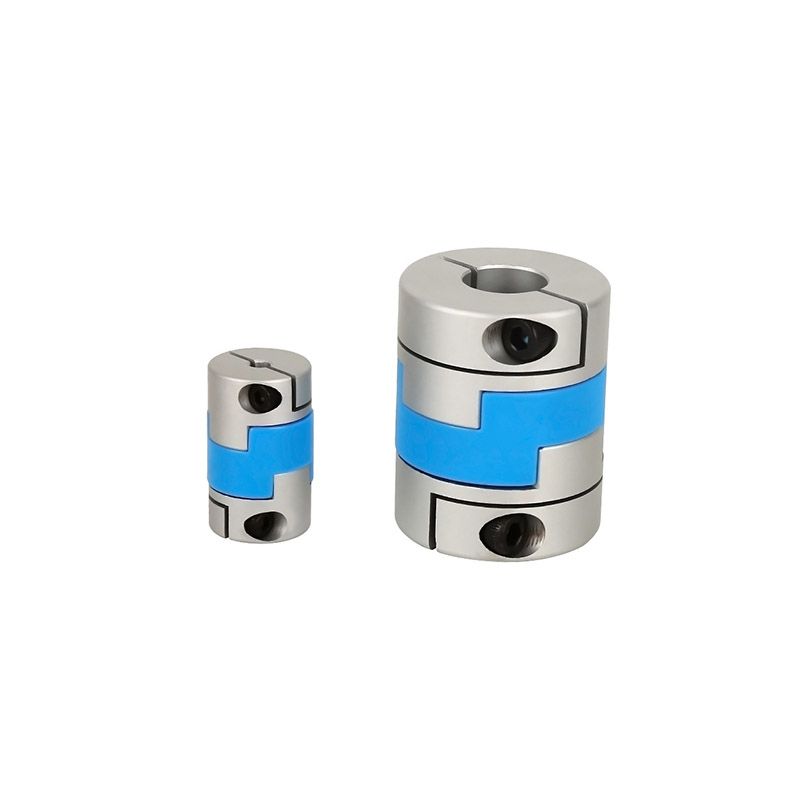
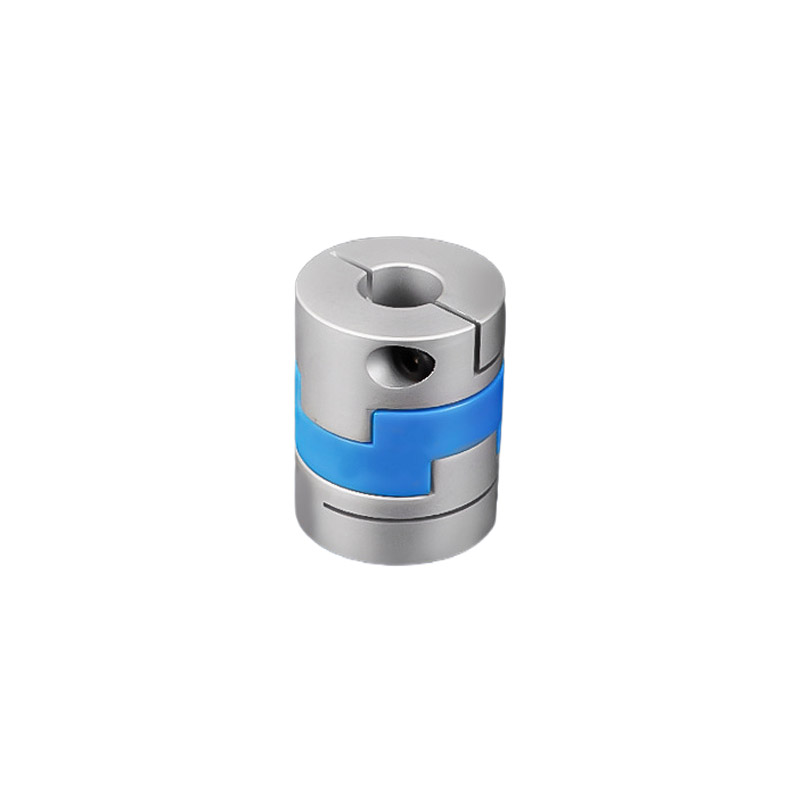
The High Torque Eccentric Coupling Joint, also known as a parallel eccentric coupling or Schmidt coupling, is a specialized transmission component engineered specifically for high-torque power transmission under large parallel radial misalignment. It effectively compensates for the performance limitations of traditional couplings and serves as an optimal solution for heavy-duty transmission in confined spaces.
十字滑块联轴器_005.jpg

1. What Is a High Torque Eccentric Coupling?

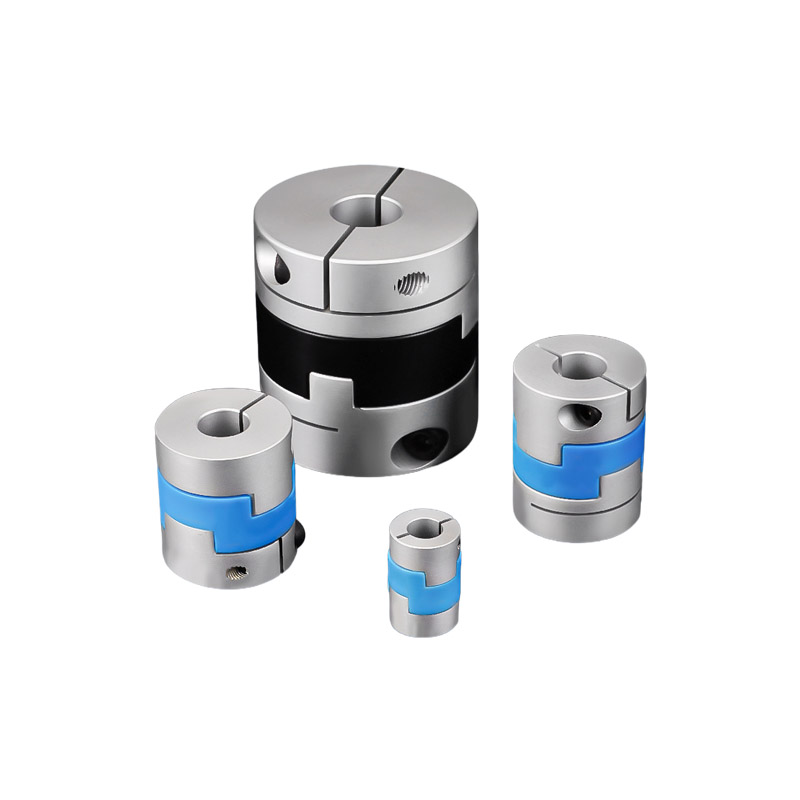
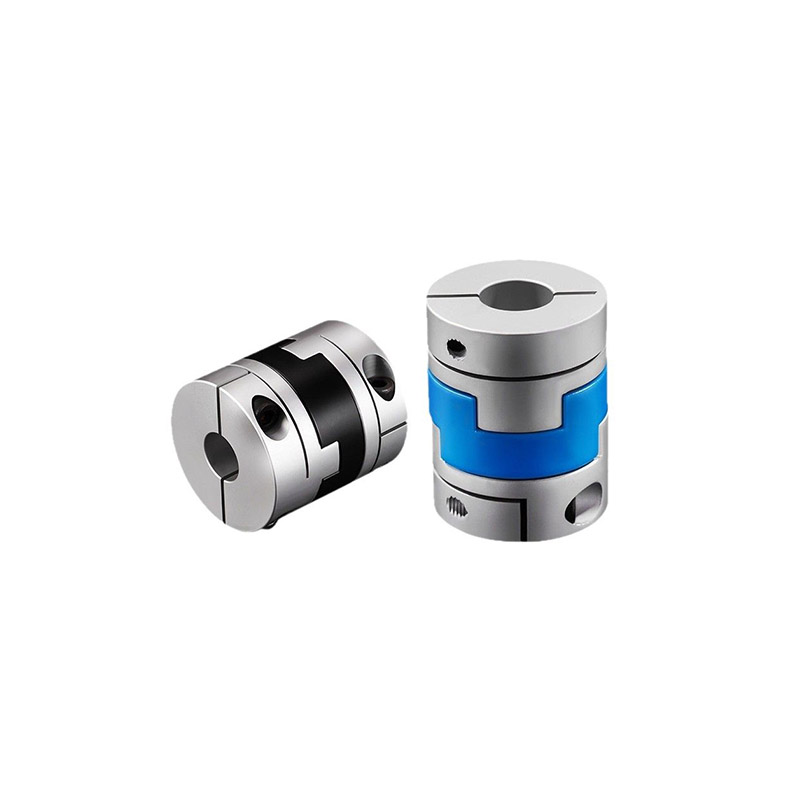
A high torque eccentric coupling is a high-precision, high-rigidity rigid transmission connector. It consists of two end flanges, a central intermediate disc, and a connecting rod mechanism, featuring a structural design distinct from flexible couplings, gear couplings, and universal joints. Leveraging the crank motion principle of an eccentric structure, it accommodates radial misalignment between two parallel shafts while maintaining constant rotational speed and zero torque loss, achieving constant-speed, high-efficiency power transmission without lateral load.


Unlike ordinary couplings that adopt flexible buffering structures, this coupling features an all-metal rigid design with no wearable elastic components. It delivers exceptional heavy-load capacity and covers a wide torque range, applicable to both small precision equipment and large heavy-duty machinery. Its transmission efficiency exceeds 98.5%, ensuring nearly zero power loss during operation.

2. Working Principle: Misalignment-Free Transmission via Eccentric Mechanism

A common technical question arises: how can stable, damage-free transmission be achieved despite shaft misalignment? The answer lies in its unique parallel eccentric transmission mechanism.


During operation, the driving shaft rotates the input flange, and power is transmitted to the central intermediate disc through evenly distributed connecting rods, which synchronously drives the output flange and driven shaft. Following an eccentric crank motion trajectory, the structure automatically adapts to and compensates for parallel radial shaft offset, tolerating conventional misalignment of 6mm or more.


Its most critical technical advantage is zero additional lateral load throughout operation. Traditional couplings generate continuous radial tension and wear on shafts, bearings, and reducers when compensating for misalignment. In contrast, the closed-loop transmission structure of the eccentric coupling fully absorbs misalignment stress within its own structure, protecting the entire transmission system and significantly reducing equipment failure rates. Furthermore, constant-speed operation ensures complete synchronization of input and output speeds with no speed difference or transmission vibration.

3. Four Core Advantages Over Traditional Transmission Components

3.1 Ultra-High Torque Capacity and Torsional Rigidity

Built with an integrated all-metal rigid structure and free of wearable flexible parts such as rubber and springs, it provides a direct and efficient transmission path with excellent resistance to impact and alternating loads. With the same dimensional size, it offers far higher torque capacity than flexible couplings, stably transmitting heavy power for continuous high-intensity operation of heavy machinery and eliminating torque insufficiency and transmission slippage.

3.2 Large Misalignment Compensation with Zero Additional Damage

Specialized in compensating parallel radial misalignment, it effectively resolves shaft misalignment caused by assembly errors, frame settlement, and operational deformation. Unlike universal joints, which only compensate for angular misalignment and cannot handle large parallel offset, this coupling operates stably under significant parallel misalignment without exerting lateral pressure on equipment, protecting bearings, shafts, and seals from abnormal wear.

3.3 Compact Structure for Confined Installation Spaces

Conventional solutions for large misalignment compensation require lengthy universal drive shafts and extended mounting brackets, occupying substantial equipment space. The high torque eccentric coupling features a compact, highly integrated structure that requires no extra installation space. It adapts perfectly to compact equipment layouts, simplifies overall mechanical structures, and reduces design and manufacturing costs, making it an ideal alternative for heavy-duty transmission in limited spaces.

3.4 Maintenance-Free Design and Long Service Life

Featuring a robust, simplified structure with no consumable flexible components, it offers excellent wear resistance, fatigue resistance, high-temperature resistance, and dustproof and waterproof performance, suitable for harsh industrial environments. It operates stably with zero vibration, noise, or torque attenuation, maintaining long-term transmission precision. The maintenance-free design greatly reduces daily operation costs and equipment downtime losses.
十字滑块联轴器_006.jpg

4. Main Application Scenarios for Industrial Heavy-Duty Working Conditions

Combining high torque capacity, superior rigidity, large misalignment compensation, and outstanding stability, high torque eccentric couplings are widely applied in industries requiring high transmission precision, heavy load capacity, and reliable operation:
  • Metallurgy & Heavy Industry: Rolling mills, continuous casting machines, and heavy-duty roller conveyors. It adapts to high-temperature, continuous heavy-load operation and compensates for frame deformation misalignment.


  • Material Handling Industry: Large belt conveyors, screw conveyors, and lifting equipment. It resolves shaft misalignment caused by assembly offset and mechanical vibration.


  • Precision Machining Industry: Large machine tools, heavy-duty automated equipment, and precision production lines. It ensures constant-speed accurate transmission and eliminates machining errors.


  • Food & Light Industry Machinery: Heavy forming equipment and assembly line transmission systems, enabling low-loss stable operation in compact layouts.


  • Mining & Construction Machinery: Crushers, drilling equipment, and heavy traveling mechanisms. It withstands impact loads and harsh working conditions to guarantee stable power transmission.

5. Core Guidelines for Selection and Usage

To maximize the performance of eccentric couplings, it is essential to avoid common mistakes during model selection and installation, with three key considerations:


1. Clarify Misalignment Compensation Requirements: This coupling is optimized for parallel radial misalignment compensation and has limited adaptability to angular and axial misalignment. For working conditions dominated by angular deviation, pairing it with a universal joint is recommended.


2. Match Rated Torque Appropriately: Reserve a torque margin of 1.2 to 1.5 times based on the equipment’s rated load and impact load. Avoid long-term full-load operation to prevent structural fatigue and extend service life.


3. Standardize Installation and Alignment: Although it features powerful misalignment compensation capabilities, installation deviation should be controlled within standard ranges. Excessive offset beyond the limit will reduce transmission efficiency and affect long-term operational stability.
十字滑块联轴器_001.jpg

6. Conclusion: The Optimal Solution for Heavy-Duty Parallel Transmission

No single coupling can adapt to all industrial transmission scenarios, but the high torque eccentric coupling precisely fills the technical gap for transmission requirements involving large parallel misalignment, high torque load, and confined installation space. It solves the common pain points of traditional couplings, including poor misalignment compensation, insufficient torque capacity, easy wear, and bulky structure. With high rigidity, high efficiency, and superior stability, it has become an indispensable core transmission component in heavy machinery, material handling, and precision machinery industries.


For equipment suffering from parallel shaft misalignment, requiring continuous heavy-duty power transmission and low maintenance costs, the high torque eccentric coupling delivers outstanding cost performance and practicality, serving as a reliable and robust transmission solution.


WeChat

WeChat

WhatsApp

WhatsApp

Hotline:

+8615066616606
No. 188 Kunlun Road, Hongyun Development Zone, Qingyun County, Dezhou City, Shandong Province hq@hqcplg.com
Copyright © 2025 HQCPLG Company All rights reserved
We use cookie to improve your online experience. By continuing to browse this website, you agree to our use of cookie.

Cookies

Please read our Terms and Conditions and this Policy before accessing or using our Services. If you cannot agree with this Policy or the Terms and Conditions, please do not access or use our Services. If you are located in a jurisdiction outside the European Economic Area, by using our Services, you accept the Terms and Conditions and accept our privacy practices described in this Policy.
We may modify this Policy at any time, without prior notice, and changes may apply to any Personal Information we already hold about you, as well as any new Personal Information collected after the Policy is modified. If we make changes, we will notify you by revising the date at the top of this Policy. We will provide you with advanced notice if we make any material changes to how we collect, use or disclose your Personal Information that impact your rights under this Policy. If you are located in a jurisdiction other than the European Economic Area, the United Kingdom or Switzerland (collectively “European Countries”), your continued access or use of our Services after receiving the notice of changes, constitutes your acknowledgement that you accept the updated Policy. In addition, we may provide you with real time disclosures or additional information about the Personal Information handling practices of specific parts of our Services. Such notices may supplement this Policy or provide you with additional choices about how we process your Personal Information.


Cookies

Cookies are small text files stored on your device when you access most Websites on the internet or open certain emails. Among other things, Cookies allow a Website to recognize your device and remember if you've been to the Website before. Examples of information collected by Cookies include your browser type and the address of the Website from which you arrived at our Website as well as IP address and clickstream behavior (that is the pages you view and the links you click).We use the term cookie to refer to Cookies and technologies that perform a similar function to Cookies (e.g., tags, pixels, web beacons, etc.). Cookies can be read by the originating Website on each subsequent visit and by any other Website that recognizes the cookie. The Website uses Cookies in order to make the Website easier to use, to support a better user experience, including the provision of information and functionality to you, as well as to provide us with information about how the Website is used so that we can make sure it is as up to date, relevant, and error free as we can. Cookies on the Website We use Cookies to personalize your experience when you visit the Site, uniquely identify your computer for security purposes, and enable us and our third-party service providers to serve ads on our behalf across the internet.

We classify Cookies in the following categories:
 ●  Strictly Necessary Cookies
 ●  Performance Cookies
 ●  Functional Cookies
 ●  Targeting Cookies


Cookie List
A cookie is a small piece of data (text file) that a website – when visited by a user – asks your browser to store on your device in order to remember information about you, such as your language preference or login information. Those cookies are set by us and called first-party cookies. We also use third-party cookies – which are cookies from a domain different than the domain of the website you are visiting – for our advertising and marketing efforts. More specifically, we use cookies and other tracking technologies for the following purposes:

Strictly Necessary Cookies
These cookies are necessary for the website to function and cannot be switched off in our systems. They are usually only set in response to actions made by you which amount to a request for services, such as setting your privacy preferences, logging in or filling in forms. You can set your browser to block or alert you about these cookies, but some parts of the site will not then work. These cookies do not store any personally identifiable information.

Functional Cookies
These cookies enable the website to provide enhanced functionality and personalisation. They may be set by us or by third party providers whose services we have added to our pages. If you do not allow these cookies then some or all of these services may not function properly.

Performance Cookies
These cookies allow us to count visits and traffic sources so we can measure and improve the performance of our site. They help us to know which pages are the most and least popular and see how visitors move around the site. All information these cookies collect is aggregated and therefore anonymous. If you do not allow these cookies we will not know when you have visited our site, and will not be able to monitor its performance.

Targeting Cookies
These cookies may be set through our site by our advertising partners. They may be used by those companies to build a profile of your interests and show you relevant adverts on other sites. They do not store directly personal information, but are based on uniquely identifying your browser and internet device. If you do not allow these cookies, you will experience less targeted advertising.

How To Turn Off Cookies
You can choose to restrict or block Cookies through your browser settings at any time. Please note that certain Cookies may be set as soon as you visit the Website, but you can remove them using your browser settings. However, please be aware that restricting or blocking Cookies set on the Website may impact the functionality or performance of the Website or prevent you from using certain services provided through the Website. It will also affect our ability to update the Website to cater for user preferences and improve performance. Cookies within Mobile Applications

We only use Strictly Necessary Cookies on our mobile applications. These Cookies are critical to the functionality of our applications, so if you block or delete these Cookies you may not be able to use the application. These Cookies are not shared with any other application on your mobile device. We never use the Cookies from the mobile application to store personal information about you.

If you have questions or concerns regarding any information in this Privacy Policy, please contact us by email at . You can also contact us via our customer service at our Site.