
Encyclopedia
 current location: Home > News > Encyclopedia
 Release time:2026-08-08
 page views:
 Jaw Coupling: A Low-Profile and Reliable Elastic Connection Link in Industrial Transmission
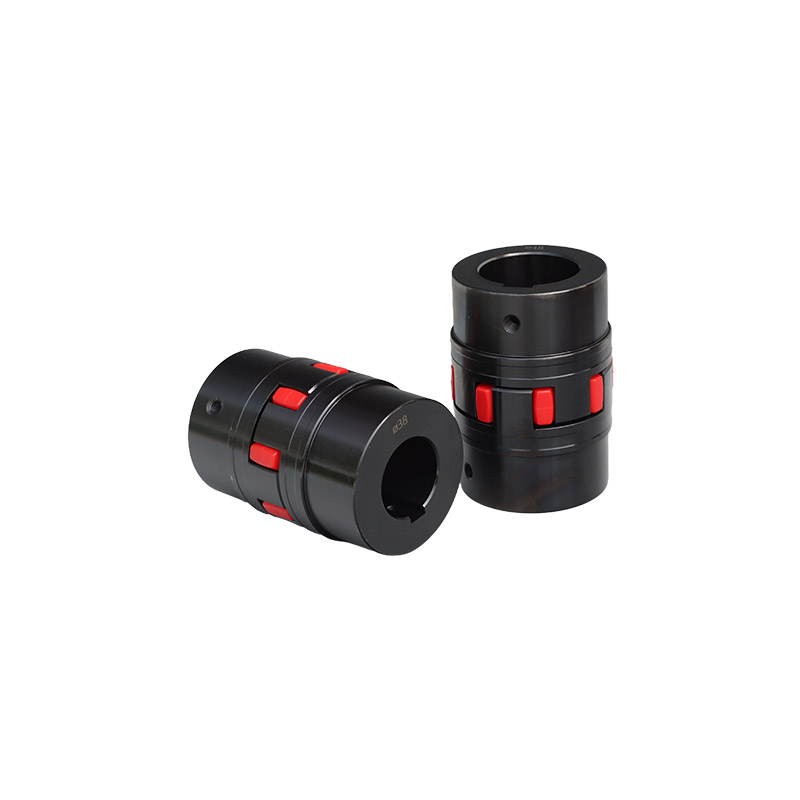
In mechanical transmission systems, couplings are essential core components used to connect two transmission shafts, transmit torque and rotational speed, and resolve various transmission deviations and vibration issues during equipment operation. As one of the most widely used flexible elastic couplings, the jaw coupling boasts a compact structure, excellent vibration damping performance, lubrication-free operation and easy maintenance. It is extensively applied to medium and small-sized transmission equipment such as motors, water pumps, fans and speed reducers. A classic accessory in the general machinery industry, it is also commonly known as a plum blossom elastic coupling in the industry.
I. Core Structure: Minimalist Three-Part Design
The jaw coupling features an extremely simple structure without complex precision parts. It is entirely composed of two metal jaw discs (half couplings) and one plum blossom-shaped elastic body, which can realize the transmission function after assembly with outstanding structural stability.
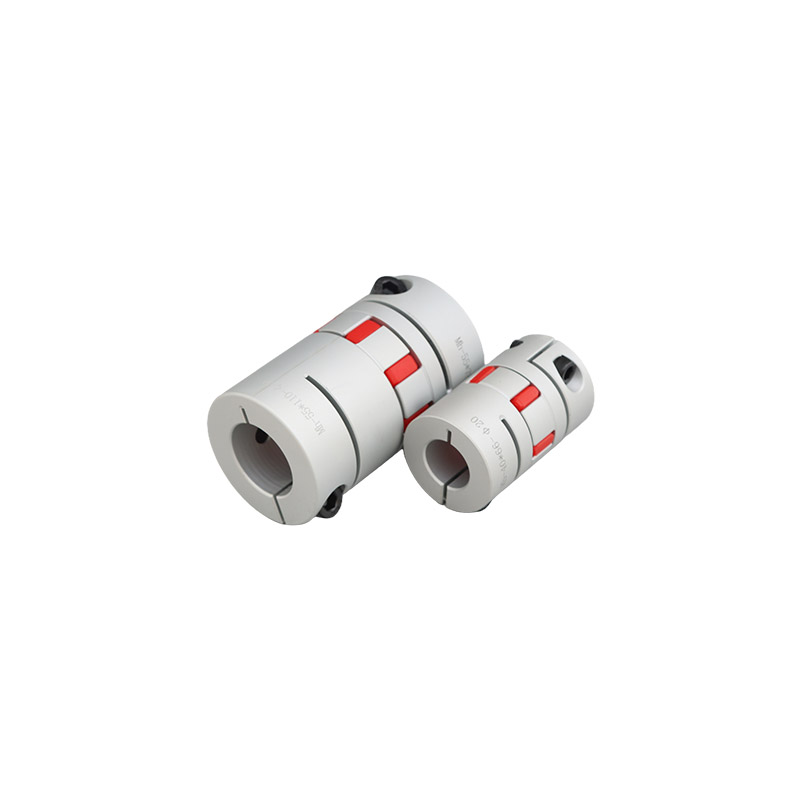
1. Metal Jaw Disc: Serving as the rigid transmission base and the load-bearing core of the coupling, it is generally made of 45# steel through precision machining processes including turning, milling and broaching, with integral heat treatment to ensure high strength, rigidity and wear resistance. For lightweight and high-sensitivity precision equipment, aluminum alloy jaw discs can be adopted to reduce moment of inertia. Uniformly distributed arc-shaped convex jaws on the inner side of the two jaw discs are arranged in a staggered manner to clamp and support the elastic body.
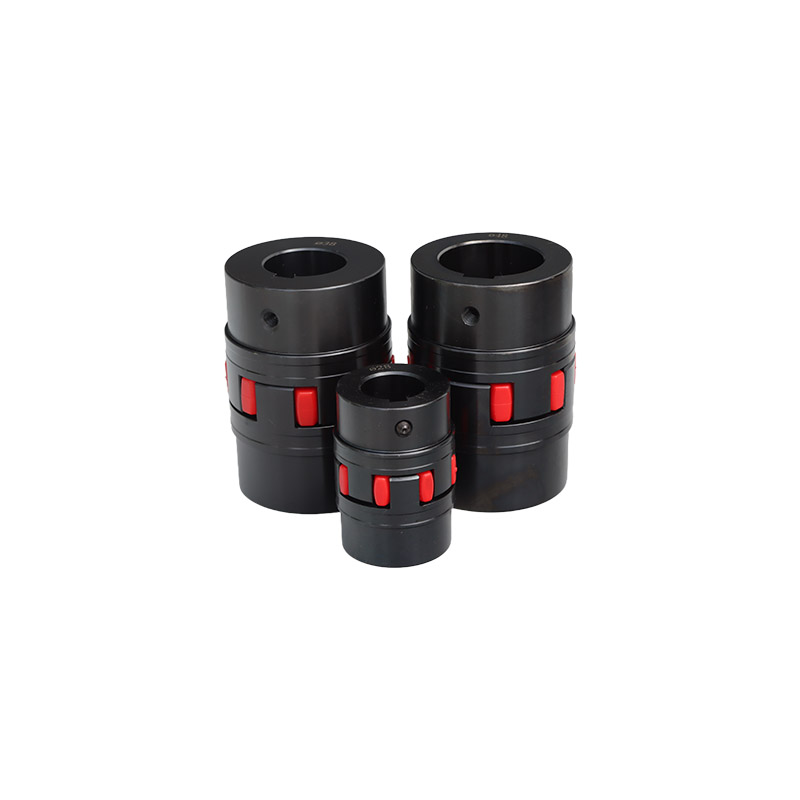
2. Plum Blossom Elastic Body: As the core functional component, it is mostly made of elastic materials such as polyurethane, rubber and nylon. Its plum blossom-shaped structure fits perfectly into the gaps between the convex jaws of the two discs. During equipment operation, torque is transmitted through the extrusion of the elastic body by the convex jaws. Relying on elastic deformation, it achieves buffering, vibration damping and displacement compensation, acting as the key to the flexible transmission of the coupling.
Free of scattered transmission parts such as bolts and springs, the coupling has a compact structure and small radial size, making it highly suitable for equipment with limited installation space.
II. Working Principle: Flexible Transmission and Multi-Dimensional Compensation
The jaw coupling adopts a simple and scientific transmission logic, belonging to typical elastic buffer transmission instead of the rigid hard transmission of rigid couplings. During equipment operation, the driving-end jaw disc squeezes the plum blossom elastic body to stably transmit torque to the driven-end jaw disc, so as to drive the operation of the driven shaft.
During the assembly and operation of mechanical equipment, it is inevitable to have coaxiality deviation between two connected shafts, resulting in axial, radial and angular displacement errors. The elastic body of the jaw coupling can generate micro elastic deformation to compensate for three-dimensional displacement errors in all directions, avoiding hard friction and impact wear of shafting, bearings, gears and other components caused by deviation. Meanwhile, the elastic body can effectively absorb vibration, noise and instantaneous impact load during transmission, delivering excellent vibration damping, noise reduction and insulation buffering effects, and greatly protecting the core components of transmission equipment.
III. Main Models and Material Classification
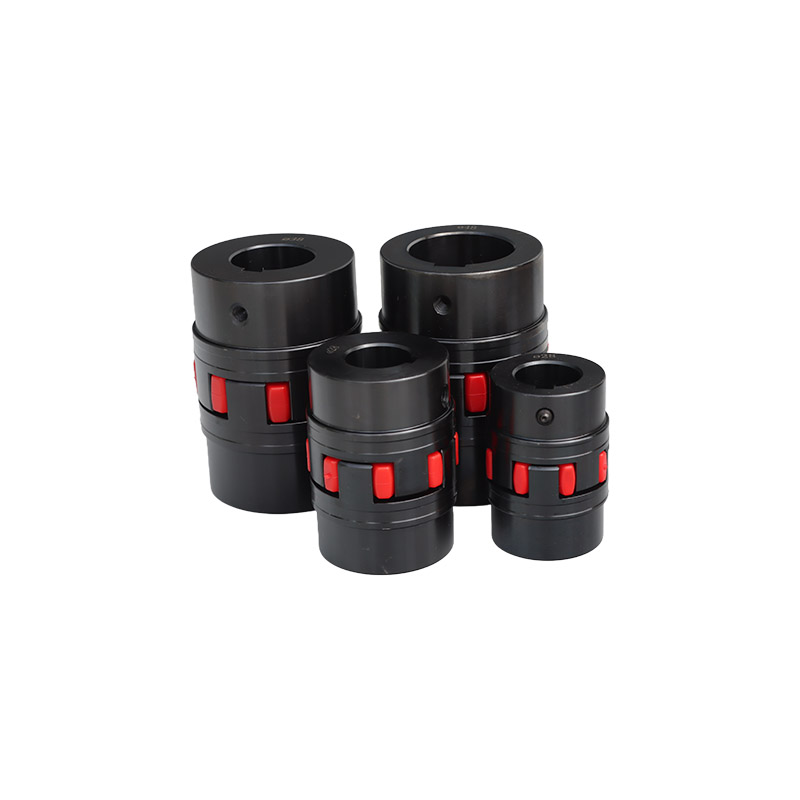
After standardized iteration in the industry, jaw couplings have formed a standardized model system. The mainstream national standard LM (ML) series in the market has derived subdivided models including LMD, MLZ, LMS and MLL to adapt to different installation scenarios and load requirements. Among them, the LM model is the basic standard type with the strongest universality.
The material of the core elastic body determines the working condition adaptability of the coupling. The characteristics of mainstream industrial materials are as follows:
1. Polyurethane Elastic Body: The most commonly used material in industry, featuring wear resistance, oil resistance, aging resistance, high load-bearing capacity and mechanical strength, and long service life. It is suitable for most conventional industrial working conditions and supports long-term continuous operation, offering the highest cost performance.
2. Rubber Elastic Body: It achieves excellent vibration damping effect and high flexibility, making it suitable for low-load equipment with slight impact and high noise reduction requirements. However, it has poor high-temperature resistance and wear resistance with limited load-bearing capacity.
3. Nylon Elastic Body: It has relatively higher rigidity and better transmission accuracy than rubber and ordinary polyurethane materials, with a low friction coefficient, applicable to high-precision and low-impact precision transmission scenarios.
IV. Core Advantages with Clear Application Adaptability
(I) Core Advantages
1. Strong Comprehensive Compensation Capacity: It can simultaneously compensate for axial, radial and angular three-dimensional displacement deviations, adapt to equipment assembly errors and operational deformation with high fault tolerance.
2. Excellent Vibration Damping and Buffering Performance: The elastic body effectively absorbs instantaneous impact loads and mechanical vibration, reduces operating noise, and protects precision components such as motors and bearings to extend equipment service life.
3. Maintenance-Free and Low Energy Consumption: The structure has no friction pairs, requiringno lubrication or regular oil maintenance. It needs minimal daily maintenance and supports long-term stable continuous operation.
4. Compact Structure and Wide Adaptability: It features small radial size, light weight and low moment of inertia, suitable for medium and high-speed transmission working conditions. It fits narrow installation spaces and is easy to disassemble and replace without dismantling the whole equipment.
5. Insulation Performance: The non-metallic elastic material blocks current conduction, effectively preventing equipment corrosion and damage caused by shaft current.
V. Applicable and Prohibited Working Conditions
Based on its performance characteristics, the jaw coupling is precisely applicable to general mechanical transmission scenarios with medium and small torque, medium and high speed, slight impact and vibration and noise reduction requirements, serving as the preferred coupling for civil and industrial general equipment.
✅ Applicable Scenarios: Motor pump sets, fans, air compressors, speed reducers, CNC machine tools, conveying equipment, packaging machinery, textile machinery, precision automation equipment and other medium and small-sized transmission systems.
❌ Prohibited Working Conditions: High-temperature boiler equipment, heavy metallurgical machinery, mining heavy-duty equipment, high-precision servo transmission, and special working conditions with frequent severe impact loads. Such scenarios require professional accessories such as diaphragm couplings and gear couplings.
VI. Daily Selection and Maintenance Guidelines
1. Selection Criteria: Select the appropriate model according to the equipment’s rated torque, rotational speed, shaft hole diameter, installation spacing and operating temperature, and reserve a torque safety factor of 1.2~1.5 to avoid overload damage. Choose polyurethane elastic bodies for conventional working conditions, rubber bodies for high noise reduction requirements, and nylon bodies for precision transmission scenarios.
2. Installation Requirements: Ensure the coaxiality error of the two shafts is within the allowable range during installation. Excessive deviation will cause rapid wear of the elastic body and intensified equipment vibration.
3. Maintenance and Replacement: No daily maintenance is required, only regular inspection. Abnormal equipment vibration, increased noise or transmission stuttering usually indicates aging and damage of the elastic body. Only the elastic body needs to be replaced with a specification-matched new one, while the jaw discs can be retained, resulting in extremely low maintenance costs.
VII. Summary
Without a complex structural design, the jaw coupling has become a universal coupling in the industrial transmission field by virtue of its comprehensive advantages including flexible transmission, multi-dimensional compensation, vibration and noise reduction, maintenance-free operation and high cost performance. It accurately meets the transmission needs of most general mechanical equipment and solves three core problems of shaft transmission: deviation, vibration and impact with a minimalist structure. It is one of the most practical and reliable basic transmission accessories in mechanical design and equipment operation and maintenance. Reasonable model selection and regular inspection and replacement of wearing parts can ensure its long-term stable transmission performance and efficient equipment operation.


Hotline:
+8615066616606 hq@hqcplg.com



 No. 188 Kunlun Road, Hongyun Development Zone, Qingyun County, Dezhou City, Shandong Province