Hello! Welcome to the official website of Huaqiang Coupling!

Encyclopedia

current location: Home > News > Encyclopedia

Universal Telescopic Coupling
Release time:2026-08-05page views:

Universal Telescopic Coupling


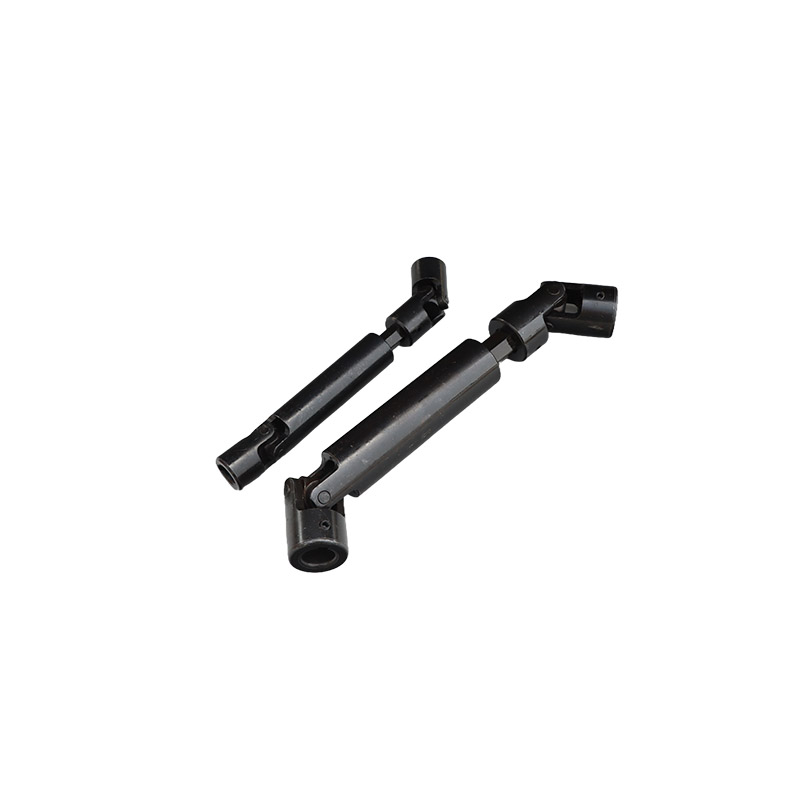
万向节伸缩联轴器_09.jpg

In the precision mechanical transmission systems that power industrial equipment, automated production lines, and engineering machinery, couplings serve as the core “power bridge” connecting rotating shafts. Among all types of couplings, the universal telescopic coupling is a highly versatile and adaptable key component. It perfectly integrates the angular compensation capability of universal joints and the axial displacement adaptation of telescopic structures, solving the typical problem of rigid couplings that cannot accommodate complex shaft misalignment and dynamic length changes. This article systematically introduces its structure, working principle, core advantages, application scenarios, and maintenance guidelines.

1. Basic D

1. Basic Definition and Core Positioning

A universal telescopic coupling, also known as a telescopic universal joint coupling, is a high-performance mechanical transmission device designed to transmit torque and rotational power between two shafts with relative displacement. Unlike ordinary rigid couplings that require highly precise fixed shaft alignment with almost no tolerance, and unlike standard universal joints that lack axial adjustment capability, it is specially engineered for dynamic operating conditions with simultaneous angular deviation, parallel offset, and axial length variation.
The core value of this component lies in its ability to continuously, stably, and efficiently transmit power while automatically compensating for various shaft misalignments caused by installation errors, mechanical vibration, thermal expansion and contraction, and frame deformation. It significantly improves the operational stability and service life of transmission systems.

2. Structural Composition and Working Principle

The universal telescopic coupling features a compact and well-designed structure, mainly consisting of a universal joint assembly, a telescopic spline mechanism, fork joints, and connecting flanges. The two core functional units operate independently and cooperatively to achieve dual compensation for angular and axial displacements.

2.1 Universal Joint Assembly: Core for Angular Compensation

This assembly is composed of a cross shaft, bearing sets, and joint forks, forming the classic foundational structure of universal couplings. When angular deflection or parallel offset occurs between the driving shaft and the driven shaft, the cross shaft flexibly rotates with the bearings to steadily transmit torque without power interruption or rigid jamming. The optimized double universal joint structure allows a maximum operating deflection angle of up to 45°, covering most industrial angular misalignment conditions.

2.2 Telescopic Spline Mechanism: Core for Axial Adjustment

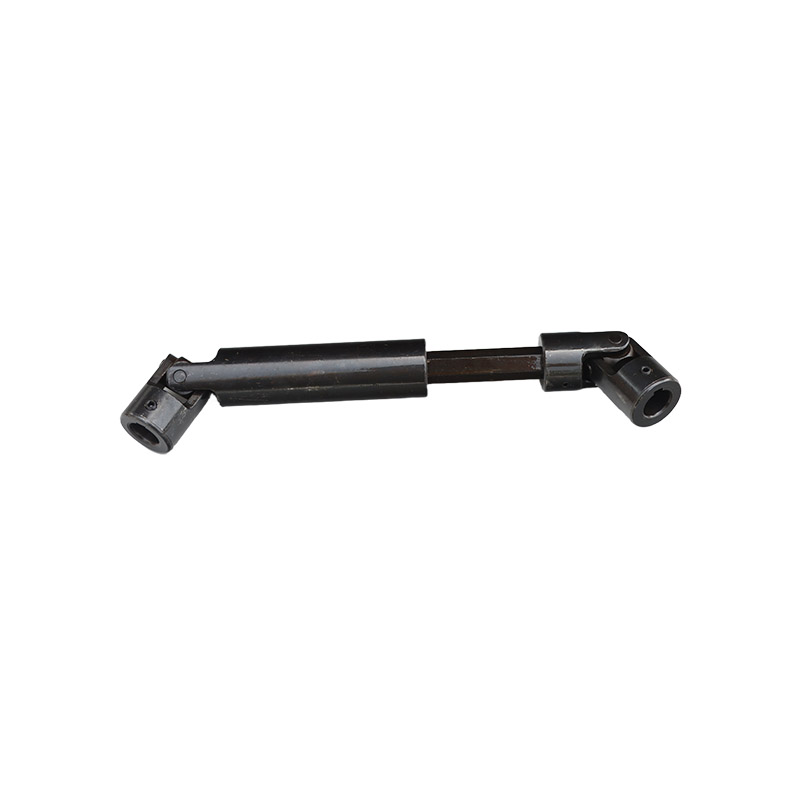
This is the key structure that distinguishes universal telescopic couplings from ordinary universal couplings. It adopts a precisely machined matching structure with an inner spline shaft and an outer spline sleeve. The inner spline shaft slides smoothly and axially inside the outer sleeve, enabling the coupling to dynamically extend and compress within a specified stroke range to adapt to length variations.
During equipment operation, when the shaft spacing changes due to thermal expansion and contraction, mechanical movement, or load deformation, the spline telescopic structure automatically adjusts the overall length of the coupling. This eliminates axial tensile and compressive stress and prevents shaft deformation, bearing damage, and transmission failure caused by rigid force loading.

2.3 Overall Working Mechanism

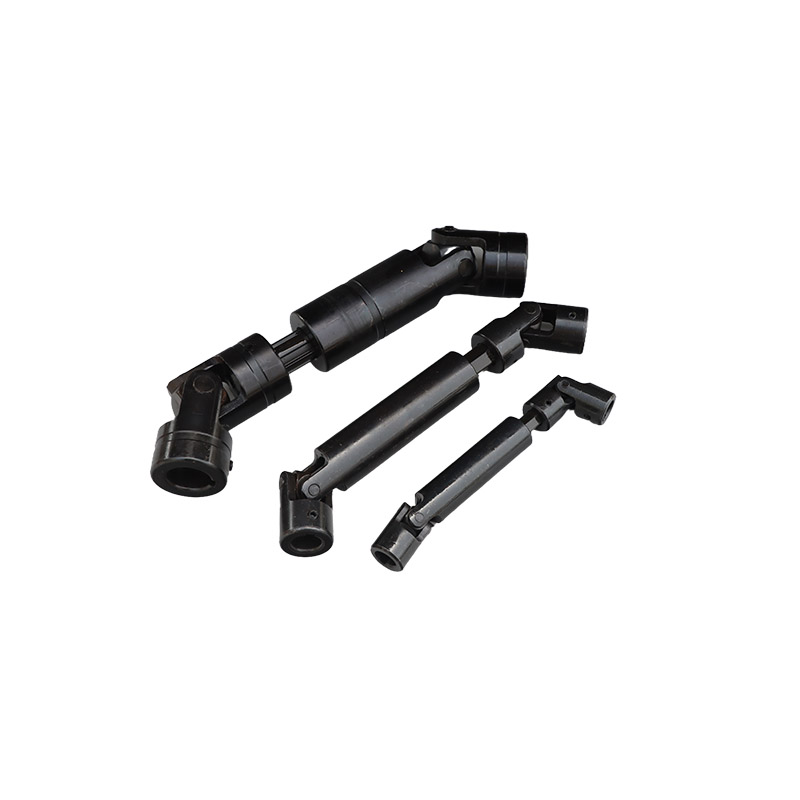
The driving shaft transmits power to the universal joint fork and drives the cross shaft to rotate synchronously. The cross shaft then transfers torque to the opposite joint fork and the telescopic intermediate shaft, ultimately driving the driven shaft to operate stably. Throughout the operation, the universal joint compensates for angular and parallel misalignment, while the spline structure adapts to axial length changes, realizing error-free dynamic power transmission.
万向节伸缩联轴器_08.jpg

3. Unique Performance Advantages

Compared with traditional rigid couplings, gear couplings, and standard universal couplings, universal telescopic couplings are more suitable for complex working conditions with remarkable comprehensive performance advantages:
  • Multi-dimensional displacement compensation: It simultaneously compensates for angular deviation, parallel offset, and axial displacement. A single component solves various shaft alignment problems and offers far stronger environmental adaptability than single-function couplings.
  • Backlash-free stable transmission: The precisely fitted spline and bearing assembly design eliminates transmission backlash completely. It ensures synchronous and accurate torque transmission even under variable load conditions, making it suitable for high-precision transmission scenarios.
  • Excellent vibration damping and cushioning performance: The flexible telescopic and rotating structure absorbs mechanical vibration and impact loads generated during equipment operation, reduces system vibration and noise, and effectively protects core components such as motors and bearings.
  • Low installation and maintenance costs: It does not require ultra-high-precision shaft alignment during installation, greatly reducing construction difficulty and time costs. The integral structure features high rigidity, good wear resistance, long service life, and low failure rate.
  • Wide torque and stroke adaptability: Industrial-grade products can transmit large torque and adapt to telescopic strokes of different specifications. Custom extended structures can meet the medium and long-distance transmission requirements of large construction machinery and complete industrial equipment with wide application coverage.

    万向节伸缩联轴器_01.jpg

4. Typical Industrial Application Scenarios

Benefiting from outstanding dynamic adaptability, universal telescopic couplings are widely applied in mechanical equipment with frequent displacement, variable loads, and complex working conditions, covering most industrial transmission fields:
  • Industrial automated production lines: Applied to conveyor lines, robotic transmission mechanisms, and automated processing equipment to adapt to axial displacement and angular offset caused by frequent start-stop and reciprocating motion.
  • Heavy industrial machinery: Used in steel rolling equipment, forging machinery, and mining machinery to resist thermal deformation displacement and heavy impact loads generated under high-temperature and high-load operation.
  • Construction and lifting machinery: Equipped on cranes, excavators, and transport vehicles to adapt to dynamic shaft spacing changes and angular deflection during mechanical luffing and traveling operations.
  • Logistics and packaging equipment: Suitable for high-speed packaging, sorting, and conveying machinery to ensure stable high-speed transmission and reduce equipment wear.
  • Metallurgical and chemical equipment: Adaptable to harsh operating environments with high temperature, intense vibration, and large equipment deformation, ensuring continuous and reliable power transmission.

5. Core Guidelines for Selection and Maintenance

Scientific selection and standardized daily maintenance are essential to maximize the performance of universal telescopic couplings:

5.1 Key Selection Parameters

Priority shall be given to rated torque, maximum telescopic stroke, allowable deflection angle, shaft hole diameter, and installation distance during model selection. A reasonable safety margin should be reserved for torque parameters according to actual working loads to avoid long-term overload operation. The telescopic stroke must match the maximum axial displacement of the equipment to ensure sufficient adjustment allowance.

5.2 Daily Maintenance Essentials

Regularly inject high-quality grease into spline mating surfaces and universal joint bearings to reduce friction and wear. Consistently check the tightness of connecting bolts to prevent vibration caused by loose fasteners. Timely clean dust and impurities on the telescopic structure to avoid jamming and impaired flexibility. Regularly inspect the wear condition of cross shafts and splines, and replace worn components in a timely manner to eliminate potential transmission failures.
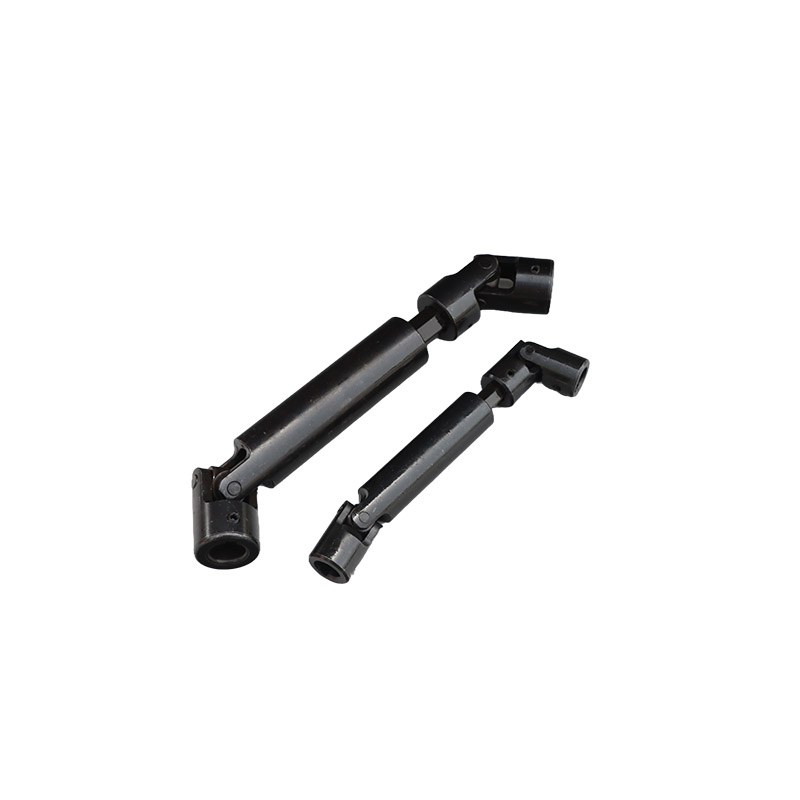
万向节伸缩联轴器_02.jpg

6. Conclusion

As a composite flexible transmission component, the universal telescopic coupling perfectly integrates angular compensation and axial telescopic adjustment functions, breaking the application limitations of traditional couplings under complex dynamic working conditions. Featuring stable transmission, strong adaptability, and long service life, it has become an indispensable core component in modern industrial mechanical transmission systems. Scientific selection and standardized maintenance can effectively improve the operational efficiency of mechanical equipment, reduce failure rates, and provide reliable power transmission guarantees for industrial production and mechanical operation.


WeChat

WeChat

WhatsApp

WhatsApp

Hotline:

+8615066616606
No. 188 Kunlun Road, Hongyun Development Zone, Qingyun County, Dezhou City, Shandong Province hq@hqcplg.com
Copyright © 2025 HQCPLG Company All rights reserved
We use cookie to improve your online experience. By continuing to browse this website, you agree to our use of cookie.

Cookies

Please read our Terms and Conditions and this Policy before accessing or using our Services. If you cannot agree with this Policy or the Terms and Conditions, please do not access or use our Services. If you are located in a jurisdiction outside the European Economic Area, by using our Services, you accept the Terms and Conditions and accept our privacy practices described in this Policy.
We may modify this Policy at any time, without prior notice, and changes may apply to any Personal Information we already hold about you, as well as any new Personal Information collected after the Policy is modified. If we make changes, we will notify you by revising the date at the top of this Policy. We will provide you with advanced notice if we make any material changes to how we collect, use or disclose your Personal Information that impact your rights under this Policy. If you are located in a jurisdiction other than the European Economic Area, the United Kingdom or Switzerland (collectively “European Countries”), your continued access or use of our Services after receiving the notice of changes, constitutes your acknowledgement that you accept the updated Policy. In addition, we may provide you with real time disclosures or additional information about the Personal Information handling practices of specific parts of our Services. Such notices may supplement this Policy or provide you with additional choices about how we process your Personal Information.


Cookies

Cookies are small text files stored on your device when you access most Websites on the internet or open certain emails. Among other things, Cookies allow a Website to recognize your device and remember if you've been to the Website before. Examples of information collected by Cookies include your browser type and the address of the Website from which you arrived at our Website as well as IP address and clickstream behavior (that is the pages you view and the links you click).We use the term cookie to refer to Cookies and technologies that perform a similar function to Cookies (e.g., tags, pixels, web beacons, etc.). Cookies can be read by the originating Website on each subsequent visit and by any other Website that recognizes the cookie. The Website uses Cookies in order to make the Website easier to use, to support a better user experience, including the provision of information and functionality to you, as well as to provide us with information about how the Website is used so that we can make sure it is as up to date, relevant, and error free as we can. Cookies on the Website We use Cookies to personalize your experience when you visit the Site, uniquely identify your computer for security purposes, and enable us and our third-party service providers to serve ads on our behalf across the internet.

We classify Cookies in the following categories:
 ●  Strictly Necessary Cookies
 ●  Performance Cookies
 ●  Functional Cookies
 ●  Targeting Cookies


Cookie List
A cookie is a small piece of data (text file) that a website – when visited by a user – asks your browser to store on your device in order to remember information about you, such as your language preference or login information. Those cookies are set by us and called first-party cookies. We also use third-party cookies – which are cookies from a domain different than the domain of the website you are visiting – for our advertising and marketing efforts. More specifically, we use cookies and other tracking technologies for the following purposes:

Strictly Necessary Cookies
These cookies are necessary for the website to function and cannot be switched off in our systems. They are usually only set in response to actions made by you which amount to a request for services, such as setting your privacy preferences, logging in or filling in forms. You can set your browser to block or alert you about these cookies, but some parts of the site will not then work. These cookies do not store any personally identifiable information.

Functional Cookies
These cookies enable the website to provide enhanced functionality and personalisation. They may be set by us or by third party providers whose services we have added to our pages. If you do not allow these cookies then some or all of these services may not function properly.

Performance Cookies
These cookies allow us to count visits and traffic sources so we can measure and improve the performance of our site. They help us to know which pages are the most and least popular and see how visitors move around the site. All information these cookies collect is aggregated and therefore anonymous. If you do not allow these cookies we will not know when you have visited our site, and will not be able to monitor its performance.

Targeting Cookies
These cookies may be set through our site by our advertising partners. They may be used by those companies to build a profile of your interests and show you relevant adverts on other sites. They do not store directly personal information, but are based on uniquely identifying your browser and internet device. If you do not allow these cookies, you will experience less targeted advertising.

How To Turn Off Cookies
You can choose to restrict or block Cookies through your browser settings at any time. Please note that certain Cookies may be set as soon as you visit the Website, but you can remove them using your browser settings. However, please be aware that restricting or blocking Cookies set on the Website may impact the functionality or performance of the Website or prevent you from using certain services provided through the Website. It will also affect our ability to update the Website to cater for user preferences and improve performance. Cookies within Mobile Applications

We only use Strictly Necessary Cookies on our mobile applications. These Cookies are critical to the functionality of our applications, so if you block or delete these Cookies you may not be able to use the application. These Cookies are not shared with any other application on your mobile device. We never use the Cookies from the mobile application to store personal information about you.

If you have questions or concerns regarding any information in this Privacy Policy, please contact us by email at . You can also contact us via our customer service at our Site.